Friday, August 04, 2017

Nearly 40,000 teachers in Puerto Rico vote to join American Federation of Teachers amid financial crisis

Roughly 40,000 teachers in Puerto Rico voted Thursday to join the American Federation of Teachers — a trial affiliation that will last for three years.
The move comes amid a financial crisis in Puerto Rico that could close up to 167 public schools and stripped benefits and retirement security from teachers and other municipal employees.
Puerto Rico’s $70 billion in debt has brought about a near-collapse of many public services.
The Asociación de Maestros de Puerto Rico, which represents the island’s 40,000 teachers, signed the historic agreement with the 1.6 million-strong AFT to help “fight against austerity and privatization,” according to a release from both unions.
“Teachers are teachers no matter where they work, and we should be treated as professionals and respected by the government and the public as a vital and necessary resource,” AMPR president Aida Diaz said.
“For years we have been left behind and denied Social Security, as other professionals have seen improvements to their working conditions, salaries and benefits,” she added.
The AFT said it was moved to start its outreach to AMPR several years ago as the scope of the island’s economic downfall became apparent.
Teacher salaries in Puerto Rico haven’t increased in nine years, the AFT said.
In 2014 officials passed a law that prohibited salary increases of any kind until the year 2022.
The threatened loss of 167 neighborhood public schools would displace more than 27,000 students in grades K-12 and put more than 2,088 out of work, according to the AFT.
At the same time, public colleges and universities on the island face a 50% funding cut.
NYC PAPERS OUT. Social media use restricted to low res file max 184 x 128 pixels and 72 dpi

Head of the American Federation of Teachers, President Randi Weingarten says, “An attack on teachers anywhere is an attack on teachers everywhere. AMPR has been battling against austerity and privatization in Puerto Rico and the everyday consequences for the island's people."

 (MARK BONIFACIO/NEW YORK DAILY NEWS)
Nearly 46% of Puerto Ricans live in poverty, and for children the poverty rate is 58% — nearly three times higher than in mainland U.S.
The median annual salary is $19,000 compared to $53,000 on the mainland, the AFT said.
“An attack on teachers anywhere is an attack on teachers everywhere. AMPR has been battling against austerity and privatization in Puerto Rico and the everyday consequences for the island's people. With this affiliation, the 1.6 million members of the AFT join in that fight,” said AFT president Randi Weingarten.
AFT and AMPR worked together for months before inking the trial affiliation to oppose the actions of the board created in 2016 by Congress through the Puerto Rico Oversight, Management, and Economic Stability Act.
PROMESA established an oversight board that enacted a process for restructuring debt, and pushing ahead on key changes to help reduce the island’s government debt.
AFT and AMPR both oppose what they said were “attacks” on public education by PROMESA.
AMPR will be chartered as a state federation of the AFT, with AMPR-Local Sindical, the AMPR's collective bargaining agent, chartered as an AFT local.
“The people of Puerto Rico didn't cause this crisis, but they're forced to shoulder most of the burden because of the actions of hedge funders and irresponsible government deals,” Weingarten said.
“Our shared values-a strong and equitable economy, great public schools, good healthcare, a strong and vibrant democracy, and the elimination of hate and bigotry-drove us to form this partnership, and we will harness those values to mobilize our members to win,” the AFT president said.
GINGER ADAMS OTIS
Please contact your sales representative for pricing and licensing questions.

Roughly 40,000 teachers voted in Puerto Rico to join the American Federation of Teachers amid a financial crisis in Puerto Rico that faces up to 167 public schools closed.

 (ANDRE KANG/AP)
Nearly 40,000 teachers in Puerto Rico vote to join American Federation of Teachers amid financial crisis

Thursday, August 03, 2017

US control board to probe Puerto Rico debt, ties to crisis

A federal control board overseeing the finances of Puerto Rico’s government says it will investigate the U.S. territory’s debt and its relationship to the island’s economic crisis.
Wednesday’s announcement comes as government officials seek to restructure a portion of the $70 billion public debt in a process similar to bankruptcy following multimillion-dollar defaults.
Puerto Ricans who have been affected by austerity measures and those who have invested in government bonds have long demanded an audit of the debt.
Board members said Wednesday that they will form a special committee that will appoint an independent investigator. They said the investigation will help restore fiscal balance and help Puerto Rico re-enter the capital markets.
Records show that the U.S. Securities and Exchange Commission also has been investigating Puerto Rico bond sales.
Copyright © 2017 The Associated Press. All rights reserved. This material may not be published, broadcast, written or redistributed.
US control board to probe Puerto Rico debt, ties to crisis

Puerto Rico July tax collection ahead of forecast: official

Puerto Rico's tax revenue collection in July was ahead of projections, the U.S. commonwealth's treasury secretary said on Wednesday, a positive start to the new fiscal year for an island struggling with bankruptcy and a 45 percent poverty rate.
"I think we are going to be $20 to $30 million over the forecast," Raul Maldonado, said in an interview with Reuters on Wednesday while in New York meeting with legal and financial advisors to hammer out procedures for tax reform proposals.
"For July, we started the fiscal year already in positive territory because we are over the forecast. We have to close the books on the final adjustment but we feel we are over the budget," he said.
The revenue collection forecast for July, the start of the 2017-2018 fiscal year, was $600.8 million, his office said.
In the prior fiscal year, Puerto Rico's tax collections exceeded forecasts by $234.9 million, or 2.6 percent, to $9.33 billion. The main drivers for increased tax collection came from the foreign corporations excise tax, the Sales and Use Tax and the motor vehicle excise tax.
Maldonado, who is also the government's chief financial officer, said each government department is required to freeze their spending and purchase orders at 95 percent of the monthly budget.
"I want to make sure that they don't overspend. By freezing five percent I am creating a cushion so if there is any variance on a monthly basis we can address that. It is a hardline budget approach but it is a special time here," he said.
In May, Puerto Rico filed a form of bankruptcy under the federal 2016 rescue law known as PROMESA. The island's Byzantine capital structure has 18 public agencies owing a combined $120 billion in bond and pension debt.
The federally appointed financial oversight board created by PROMESA said on Wednesday it would investigate the U.S. commonwealth's debt "and its relationship to the fiscal crisis."

Tax Pilot

Maldonado said he was launching a centralized tax collection pilot program, with guidance from the U.S. Treasury Department.
Three large and three small municipalities have signed on to the test which will seek to increase tax collection efficiency while cutting bureaucracy in the 78 municipalities Puerto Rico's 3.5 million U.S. citizens call home.
"We are going to submit the tax reform during August and we will include that option as an alternative to the municipalities," he said.
Reporting By Daniel Bases; Editing by Andrew Hay
Daniel Bases
Puerto Rico July tax collection ahead of forecast: official

Wednesday, August 02, 2017

Puerto Rico instituting 5% department freezes

Puerto Rico’s government has frozen spending by departments at 5% less than allotted in the budget, in a bid to limit overall spending to what it believes to be necessary.
In the early months of his tenure as governor, Ricardo Rosselló said he was introducing “zero-based budgeting” whereby department heads would have to justify every government program and every dollar spent on programs. Puerto Rico chief financial officer Raúl Maldonado said the governor's administration has introduced the 5% program in the same spirit of careful spending.
By 
Robert SlavinPuerto Rico instituting 5% department freezes

Puerto Rico Needs Pro-Growth Tax Reform, Not Just Austerity

The Puerto Rico Oversight and Management Board recently submitted their first annual report to the U.S. Congress, as required under the PROMESA law. While the report shows some initial steps the board and territorial government have taken toward fiscal stability and better debt management, it lacks any real recommendations to bring prosperity to Puerto Rico.

Puerto Rico is, to put it mildly, an economically distressed area of the United States (while not yet a state, it's a territory fully incorporated as a possession of our country and recently passed a plebiscite in favor of statehood). It has a poverty rate of 45 percent, according the U.S. Census Bureau--over three times the national average. The unemployment rate is nearly twice that of the U.S. on average in San Juan, and a staggering 11.5 percent on the island generally. It's not hyperbole to compare Puerto Rico to America's "Great Depression" economy of the 1930s.

Yet the oversight board report in its recommendations to Congress is remarkably tame in suggestions for getting Puerto Rico moving again. Most of the ideas are very small ball--the most ambitious is turning income support like food stamps and cash welfare into an EITC program to incentivize work and consolidate help to families.

The answer as to why might reside in the board's composition. The membership is still those appointed by President Obama on his way out of office, in strong coordination with House and Senate Republican Leadership. It's possible the men and women appointed were competent at fiscal stabilization, public finance best practices, and debt refinancing, but have found themselves at a growth stage of the process now beyond their skill sets. It's also possible the appointees were a kind of compromise between what the Obama Treasury wanted and what Congressional Republicans were looking for. In any event, now that the board has had a full year under its belt, it's a good time to see if the board's needs and membership now match what they did on the heels of PROMESA's passage. Board members have three year terms, so that should be respected. But the most important criterion is getting strong economic growth back to Puerto Rico, and there is scant evidence from the first annual report that the board is thinking very imaginatively or creatively in this respect.

President Trump needs to have appointees with his full confidence. The good news is that he can start to the process of board review, right away. Most of the board members are selected by the president from a list provided by the Congressional leadership. There is one slot, however ("Category F" in PROMESA-speak), in which the president has sole discretion to appoint. President Trump should put in his own man here sooner rather than later, to ensure that his administration's interests--and not those of President Obama--are represented on the board. It's the best way to ensure a fair outcome to future debt and fiscal board outcomes, and to make certain that the board has the jobs and capital growth requirements of the people of Puerto Rico in mind.

There are two recommendations I submit the board should have made to the Congress to help the people of Puerto Rico get back on their feet:

Deal with Puerto Rico "on purpose" in federal tax reform. Too often, Puerto Rico in particular and the U.S. possessions in general are treated as an afterthought in U.S. law, and even U.S. tax law. With all that has happened in Puerto Rico in recent years, this cannot be the case in any fundamental tax reform. 

There should be an "on purpose" section of tax reform for the territories, recognizing their unique place in our economy. In the case of Puerto Rico, the tax system there is a kind of hybrid no one is comfortable with--in some respects treated like a state, and in some respects treated like a foreign country. It's confusing to taxpayers and it impedes the "free flow of capital" the PROMESA law envisions. Certainty and simplicity in the tax treatment of Puerto Rico should be a deliberate goal of federal tax reform. There are many complex arrangements already set up, and it's important that Congress deal with the patchwork status quo carefully and without threatening jobs or capital investment. But Congress ought to work with all the stakeholders on the island to come up with a more common sense and transparent tax system for everybody that looks toward the future.

Create "enterprise zones" (or "empowerment zones," "investment zones," etc.) for Puerto Rico and other economically distressed regions of our country. The late Jack Kemp was always a fan of lowering tax rates in areas of the country left behind by a rising tide otherwise lifting all boats. Tax reform ought to incorporate his "enterprise zone" concept for Puerto Rico, but also for distressed areas like inner city Detroit, Appalachia, and poor rural counties. 

Business tax rates ought to be radically lower, capital gains tax rates should be at or near zero, and all business fixed investment should be eligible for first year expensing. The areas of our country with the worst prospects for job creation and capital formation ought to have the best tax policies available to them so they can catch up with the rest of their neighbors and we can all grow together. Expect to see more here in the fall as there's been a lot of talk in Congress about enterprise zones for places like Puerto Rico.

The oversight board has done a commendable job getting their arms around a very difficult fiscal, accounting, and debt situation. That job is not over. But it's essential that the board, Congress, and Puerto Rican officials look to the other side of the equation--not just the austerity and responsibility PROMESA so accurately called for, but also how we're going to get Puerto Rico quality jobs and a rising standard of living. In order to do that. President Trump's administration will have to take a more active role.


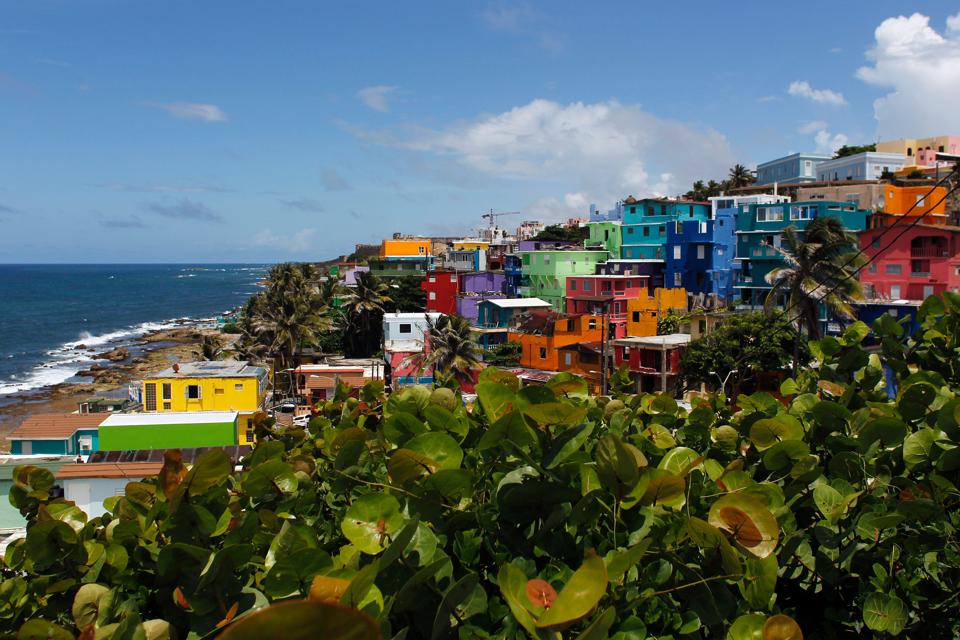
A view of the neighbourhood of La Perla where the video 'Despacito' was recorded in San Juan, on July 22
Ryan Ellis 
Puerto Rico Needs Pro-Growth Tax Reform, Not Just Austerity

Tuesday, August 01, 2017

Is Congress' plan to save Puerto Rico working?

The Conversation is an independent and nonprofit source of news, analysis and commentary from academic experts.)
Edwin Meléndez, Hunter College
(THE CONVERSATION) A year ago, Congress cobbled together a plan to try to save Puerto Rico from its US$123 billion debt and pension crisis without costing American taxpayers a penny.
The law, signed by former President Barack Obama on June 30, 2016, effectively steered Puerto Rico into bankruptcy-like proceedings in federal court to prevent a massive default, while saddling the commmonwealth with an oversight board to ensure it put its fiscal house in order.
Though the vote was bipartisan, critics called it a “Band-Aid” that would do little to solve Puerto Rico’s core problems: unsustainable debt that has kept the country mired in recession for almost a dozen years. As Democratic Sen. Bob Menendez, the plan’s fiercest foe, put it:
"
“Mark my words: if we don’t seize this opportunity to address this crisis in a meaningful way, we’ll be right back here in a year from now picking up the pieces.”
So a year later, have his words proven prescient? Or has the law – known by the acronym PROMESA – lived up to its promise to “create the necessary foundation for economic growth and to restore opportunity to the people of Puerto Rico”?
The Financial Oversight and Management Board that Congress established to manage Puerto Rico’s finances released its first progress report on July 31. At Hunter College’s Center for Puerto Rican Studies, we’ve also been keeping score, as well as tracking the human side of the crisis.
Before Congress passed the Puerto Rico Oversight, Management and Economic Stability Act (PROMESA), the Caribbean island – located about 1,000 miles southeast of Miami – had run out of options.
The end of a federal tax exemption for U.S. companies to build factories in Puerto Rico precipitated the crisis, while the global financial meltdown in 2008 made it a whole lot worse. Shut out of the credit markets after its debt was downgraded to “junk,” a government default loomed.
While U.S. municipalities can declare bankruptcy via Chapter 9, Congress in 1984 excluded Puerto Rico from seeking its relief for reasons that still elude most analysts, including me.
But with PROMESA, Puerto Rico got the breathing room for debt restructuring it so desperately needed. To judge the law’s effectiveness, however, we must determine how far it’s come in resolving the commonwealth’s three key problems: too much debt, a budget that bleeds red and – most importantly – jump-starting a battered economy.
One of the primary goals of PROMESA was to steer negotiations with creditors and eventually lead to a restructuring of $74 billion in crushing debt and $49 billion in unfunded pension obligations.
In May, Puerto Rico formally filed for bankruptcy under the special court process PROMESA created, the first time a U.S. state or territory has done so. This will allow the island to significantly reduce how much it must pay its creditors – such as mutual funds, hedge funds and individual Puerto Ricans and Americans – and retirees to whom it owes pensions. Ultimately, a New York federal judge will determine who gets what.
Puerto Rico will also have to fend off several lawsuits filed by creditors and bond insurers, some of which allege the debt-cutting plans violate the U.S. Constitution.
The seven-member Financial Oversight and Management Board should be commended for being sensible toward the need to restructure the island’s unsustainable debt levels. That process, so far, is working as intended but is far from conclusive.
That brings us to fiscal policy and the budget.
In October 2016, the Financial Oversight and Management Board revealed that Puerto Rico faced a $67.5 billion budget gap through 2026. In March, it approved a plan submitted by Gov. Ricardo Rosselló to narrow the gap by about $40 billion over a decade by, among other things, cutting health care, reducing certain pension benefits by 10 percent and putting government employees on furlough.
Simply put, punishing austerity seems unavoidable, particularly as the population continues to decline, which makes the fiscal problem worse by reducing tax revenue. About 500,000 people have left the island since the crisis began, according to my center’s research.
That’s because austerity is already sinking deep into the lives of Puerto Ricans. Funding to schools, hospitals and other essential services has been severely cut, more than 150 schools have closed and teachers, doctors and scientists are part of the island’s exodus heading for the mainland.
The plan also calls for a sharp drop in debt payments to creditors – to about 25 cents on the dollar – until the bankruptcy court rules on final amounts. Yet, despite progress on debt restructuring, the Financial Oversight and Management Board has become the face of austerity. Public opinion, at times hopeful, has given way to a growing chorus of voices against austerity, protests and other forms of resistance to the undemocratic nature of the Financial Oversight and Management Board.
Unfortunately, the fiscal plan’s austerity will make it harder to achieve the most important goal: sustainable economic growth.
Puerto Rico has endured a debilitating economic recession since 2006, the year the tax incentive for U.S. companies ended, driving unemployment as high as 17 percent (it’s currently 10 percent) and poverty to about 46 percent. It is estimated that up to 84 percent of children live in poverty areas.
The austerity in the plan, based on the government’s own projections, is expected to reduce economic growth of 2 to 3 percentage points annually over the next five years.
With numbers like these, one would think that Congress would be hard at work devising urgent economic development measures to rapidly boost growth. Unfortunately, this has not happened. Congress has yet to act on a report prepared by a bipartisan task force it set up as part of PROMESA, which laid out several key recommendations, such as shoring up Medicaid, extending the earned income tax credit to the island and supporting business development. The Financial Oversight and Management Board, in its report, also encouraged Congress to do more to stimulate Puerto Rico’s economy.
As for the Financial Oversight and Management Board and Puerto Rico’s government, not a single major economic development project has been presented to the board, even though PROMESA explicitly gives it power to fast-track “critical infrastructure” projects that create jobs and jump-start the economy.
The issue is now getting tangled up in Puerto Rico’s separate (and controversial) bid for statehood.
In a recent referendum plagued by poor turnout, Puerto Ricans voted to become the 51st state, which some argue is necessary to resolve its fiscal woes because it’ll lead to a lot of benefits. The General Accounting Office estimated that parity in federal programs will add up to $10 billion in transfers to the island. But bondholders and others are objecting to Congress’ consideration of statehood until the debt crisis is over.
They’re right about one thing: The likelihood that Congress would consider granting statehood to a bankrupt state or as a solution to the economic challenge via some kind of bailout is slim to say the least. For advocates of statehood, as it is for advocates of other political status options, the surest way to advance their cause is a revival of Puerto Rico’s economy.
Restructuring the debt and balancing the budget are important steps in that direction, but austerity alone will not solve the problem, just as it hasn’t in Greece. Puerto Rico cannot simply cut its way to solvency. It needs growth.
And to that end, Puerto Rico’s government could begin planning economic initiatives with the private sector, while Congress could act on the task force report, modest steps that could help the island get back on its feet. The data clearly show that it will only become a lot more expensive and politically sensitive.
In fact, solving the economic and fiscal crisis, while mitigating the impact of austerity on the most vulnerable populations, might be the most certain pathway to (finally) solving the political status question.
This article was originally published on The Conversation. Read the original article here: http://theconversation.com/is-congress-plan-to-save-puerto-rico-working-80785.
EDWIN MELÉNDEZ, HUNTER COLLEGE
Is Congress' plan to save Puerto Rico working?

Wednesday, July 26, 2017

Reporters seek to lift Puerto Rico's stay to probe oversight board

The stay on litigation against Puerto Rico in its debt restructuring should not bar a lawsuit seeking financial and conflict-of-interest information from the board overseeing the U.S. territory's finances, a reporters' group argued in court papers filed on Tuesday.
The island's Centro de Periodismo Investigativo (CPI) said the board has been "stonewalling" its efforts to access the information, spurring it to file a lawsuit last month to force the board to hand over the information.
Jim Christie
Reporters seek to lift Puerto Rico's stay to probe oversight board

Friday, July 21, 2017

Top Adviser to Puerto Rico Governor Resigns,' in No Way Pressured'

Elias Sanchez, Governor Ricardo Rosselló’s liaison to Puerto Rico’s financial oversight board who has been criticized over his financial disclosures, resigned on Thursday.
Sanchez, a trusted adviser to Rosselló who was effectively the face of the Puerto Rican government on issues concerning the U.S. territory's massive debt restructuring, said in an interview that he wanted to focus on opportunities in the field of law.
Rossello appointed Christian Sobrino Vega, president of Puerto Rico's Government Development Bank (GDB), as Sanchez's replacement on the board. In a statement, the governor called Sobrino "instrumental in the success of our administration."
Puerto Rico is in a historic economic crisis, with $72 billion in debt it cannot repay, a 45 percent poverty rate, and insolvent public pensions. Its finances are under the oversight of a federal board that has been given the task of helping the island craft and follow a blueprint for its fiscal turnaround.
As Rosselló’s delegate on the board, Sanchez, a former lobbyist, had become a favorite target of investors unhappy with potential cuts to debt repayment.
Specifically, Sanchez was disparaged for his financial disclosure forms - a requirement of all board members. According to critics, he did not provide enough information on the forms about his sources of income and potential conflicts of interest related to his role on the board.
Espacios Abiertos, a Puerto Rico-based nonprofit promoting transparency in government, said in a report this month that Sanchez's disclosures were more deficient in those areas than any of the other seven board members.
One adviser to a major Puerto Rico creditor group said many stakeholders "found it extremely concerning that his disclosures were so sparse."
"Not only does that undermine the board and Governor Rosselló's commitment to transparency, but it raises many questions when you've been in the lobbying sector," said the adviser, who spoke on condition of anonymity.
Sanchez, who had worked as a lobbyist in Puerto Rico, did not say whether he planned to return to lobbying.
"Right now I’m evaluating every alternative that I might have," in Puerto Rico and Central and South America, Sanchez said in a phone interview on Thursday morning.
Sanchez insists the decision to resign was his alone. "In no way was I pressured by anyone," he said, adding that while he may have come under attack, he is "very comfortable with everything" he did on the board to represent the best interests of the people of Puerto Rico.
In a statement issued in Spanish, Rossello praised Sanchez’s “great professional skills.”
“I wish to thank (Sanchez) for his willingness to serve Puerto Rico, his commitment to our administration and, on a personal level, our respect and esteem,” Rossello said.
As a non-voting member on the board, Sanchez did not have a direct role in board decisions. However, he acted as the governor's eyes, ears and voice on the board, helping him form positions on financial matters, and communicating them to the board and the public.
Jose Carrion, the chairman of the oversight board, said Sanchez "was always available, committed and dedicated to represent with determination the governor’s postures before the Board."
ALWAYS ENVISIONED LEAVING
The liaison position is unpaid, and Sanchez was technically not a government employee.
A spokesman for the governor said Sobrino will continue as president of the GDB, the island's now-defunct fiscal agent, which is being wound down as part of a liquidation agreement with creditors.
Sobrino, a lawyer, worked as a compliance officer for drug company AbbVie before his appointment to the GDB last December.
In May, Puerto Rico filed the largest bankruptcy in U.S. municipal history, sparking hard-fought litigation between the board and Puerto Rico’s creditors over the fates of the island’s agencies and the loans that back them.
The oversight board, created under the federal 2016 Puerto Rico rescue law dubbed PROMESA, certified a turnaround blueprint for Puerto Rico in March.
Sanchez said he had always envisioned leaving once the plan was in place.
The board and Rossello’s administration have not always seen eye to eye, with the governor resisting some of the board’s proposed austerity measures.
Sanchez attributed the tension to “growing pains associated with a new framework.”
“Puerto Rico had never had something like [PROMESA] before,” he said. “Were we not aligned in certain circumstances? Yes ... In the net, it’s been a positive experience.”
(Reporting by Nicholas Brown in New York; Editing by Jeffrey Benkoe and Daniel Bases)

Top Adviser to Puerto Rico Governor Resigns,' in No Way Pressured'

Tuesday, July 18, 2017

Puerto Rico Oversight Board approves GDB debt restructuring

The Puerto Rico Oversight Board approved a negotiated plan for restructuring the Government Development Bank for Puerto Rico’s $4.8 billion in debt.
The deal offers three different bond restructurings that reduce principal by 25% to 45%. Bondholders will get to choose the restructuring deal for their bonds. The options with bigger principal reductions offer bigger percent coupons and stronger security for repayment.
By 
Robert SlavinPuerto Rico Oversight Board approves GDB debt restructuring

Favoring some of Puerto Rico's creditors over others a mistake Congress should avoid

After years of fiscal mismanagement, the Commonwealth of Puerto Rico is essentially bankrupt, owing more than $70 billion to creditors. This financial fiasco was largely the result of a declining economy brought on by poor policy decisions and has only been made worse by what appears to be a collective unwillingness to make tough but responsible financial decisions.
In the wake of Puerto Rico’s default on this massive debt, Congress last year passed the Puerto Rico Oversight, Management, and Economic Stability Act (PROMESA) to create a plan to deal with the crisis.
The PROMESA legislation created an oversight board and gave it the responsibility of approving a fiscal plan, ostensibly to get Puerto Rico on the right track by making the hard decisions on spending and debt restructuring. But the fiscal plan, presented in January by recently elected Governor Ricardo Rosselló, was rejected by the board. Unable to negotiate a deal with creditors, Rosselló in May forced the Commonwealth into Title III, a bankruptcy-lite-type of protection also created by PROMESA.
Now, a year after Congress passed legislation, the path forward for Puerto Rico continues to be riddled with obstacles, including controversy over how to handle the massive debt owed to creditors.

While most experts think the Commonwealth needs a comprehensive settlement with all its creditors to get to get back on its feet, some politicians believe the way to go is to make side deals with select creditors and reduce the amount that will be repaid to them (a "haircut") by a larger percentage than other creditors.
Just last month, a subcommittee of the U.S. House Committee on Natural Resources reviewed the status of one key creditor, the Puerto Rico Electric Power Authority (PREPA), the island’s sole electric provider. The company serves 1.5 million Puerto Ricans.
Rep. Rob Bishop (R-Utah), the chairman of the subcommittee, sent a letter to the Oversight Board pressuring it to approve a special deal for PREPA that would limit its haircut on bonds to 15 percent while other bondholders could get haircuts of 70 percent. While PREPA is important to the rebuilding of Puerto Rico, favoring it over other classes of creditors stands to endanger the long-term economic growth for Puerto Rico. The result of such a huge disparity between treatment of PREPA and other creditors is likely to result in more limited credit access for the Commonwealth in the future.
The bottom line is that Puerto Ricans are worried about their future. Spending cuts include closing schools while young people are not sure if they’ll be able to go to college or get well-paying jobs. Retirees are worried about their reliable access to healthcare. Small business owners are struggling to grow and create jobs in an environment where they’ve seen tax bills rise. Young families are hurt by the lack of economic opportunities. People who are able are fleeing to the mainland in search of a better life.
On top of all this, Puerto Rico is facing a major demographic problem. The population in Puerto Rico is getting older, with 14.2 percent of the population above the age of 65. As the unemployment rate increases and the workforce shrinks, the territory’s unfunded pension commitments ($49 billion) will continue to a big problem.
The best chance of ending this spiral is to develop and implement a plan that relies on proven and sane policies that allow for job creation and economic growth. Given the reality that access to credit markets will likely be a key component of any such revival of the Puerto Rican economy, it seems the prudent thing to do would be to avoid steps, like the PREPA side-deal, that will put at risk Puerto Rico’s access to capital necessary to rebuilding its economy.
Otherwise, the economic crisis in Puerto Rico is likely to last much, much longer.
Mario H. Lopez is president of the Hispanic Leadership Fund, an advocacy organization aimed at promoting liberty, opportunity and prosperity for all Americans.
BY MARIO LOPEZ
Favoring some of Puerto Rico's creditors over others a mistake Congress should avoid

Puerto Rico’s Only Zoo Hit By Economic Crisis

MAYAGUEZ, Puerto Rico— The economic crisis afflicting Puerto Rico for the last decade has also taken a toll on the island's only zoo, with critics saying it is sorely understaffed and struggling to care for its animals on a limited budget.
Conditions at Dr. Juan A. Rivero, a 45-acre zoo featuring over 300 species in the western coastal town of Mayaguez, have deteriorated so far as to catch the attention of the U.S. Department of Agriculture, which cited dozens of violations at the park in its most recent report from this spring.
In this July 7, 2017 photo, a monkey stares out from its enclosure at the Dr. Juan A. Rivero Zoo in Mayaguez, Puerto Rico. Danica Coto / AP
They included a distressed cougar housed in a tiny enclosure; a lack of working fans for camels and deer exposed to tropical heat; expired food and medicines; and a tiger that inspectors said was underweight and had not had any medical exams or lab tests for two years.
"It makes you want to cry," said Susan Soltero, an animal activist appointed to a newly formed government committee charged with investigating conditions at the zoo. "This is unacceptable to me as a human being."
The tiger mentioned in the USDA report suffered from kidney failure and other health problems and was euthanized last month, around the time that five lion cubs also died. Four were crushed by their mother after a worker did not properly separate her from the cubs, according to Marilyn Arce, the zoo's part-time veterinarian, and the fifth was asphyxiated while being fed.
Officials at the zoo referred questions to Puerto Rico's Department of Sports and Recreation, which oversees the facility. The department's secretary, Andres Waldemar, and the zoo's former veterinarian both declined to comment. And the USDA did not respond to a request for previous inspection reports.
But Arce, who was hired in February, disputed the federal inspectors' findings and said the zoo's animals are now at a healthy weight and in good condition. She acknowledged that the 13 current caretakers need training to avoid a repeat of the lion deaths and said the zoo should hire at least four more.
"The workers did not have sufficient training to handle this type of cubs," Arce said.
The deaths and run-down conditions have prompted more than 21,000 people from Puerto Rico and elsewhere to sign a petition calling for the zoo's closure. Zoo officials have put up signs in front of certain enclosures thanking visitors for their concern and assuring them that those animals are under veterinary care.
On a recent day Cynthia Gonzalez, 35, watched as a rhinoceros knocked its horn repeatedly against a metal railing. Gonzalez said she came frequently when she was in high school but today it's noticeably worn.
"It has become a bit more deteriorated," she said. "We used to see more animals, and it needs a bit more maintenance."
Angel Luis Rodriguez, who was visiting with family, agreed: "The animals used to look stronger before. They were plumper."
In this July 7, 2017 photo, a tiger named "Angel," who recently died at the Dr. Juan A. Rivero Zoo, still has his sign outside his enclosure in Mayaguez, Puerto Rico. Danica Coto / AP
At recent public hearings held by concerned lawmakers, Jose Arce, a veterinarian who is on a committee charged with investigating the zoo's conditions and is not related to Marilyn Arce, testified that the park needs more employees and new cages, among other things.
But that's a tall order amid the prolonged economic recession that has also forced the government to declare a state of emergency at certain agencies and seek a bankruptcy-like process for a portion of its $73 billion public debt.
Gerardo Hernandez, auxiliary secretary of the island's National Parks Program, said the government has ordered a study of how much money is needed to improve zoo conditions. He said the animals are in good condition and well fed, but bringing in new employees is unlikely for now.
"No government agency is hiring people. We are working with what we have," he said. "If we had more revenue, there would be more improvements."
The zoo operates on $1.2 million in funds it receives yearly from Puerto Rico's government. Victor Oppenheimer, former president of Puerto Rico's Veterinary Medical Association, estimated it needs $8 million to $10 million to run properly.
"A lot of times," he said, "they make decisions based on money and not necessarily on what's best for the animal."
Oppenheimer said the zoo needs not only more caretakers but also a full-time curator as well as a full-time and several part-time veterinarians. He praised Marilyn Arce's work but said that as a lone part-timer, "she cannot keep up."
Jose Arce said the lack of an adequate hospital forces vets to perform surgeries in the animal enclosures, raising concerns about safety and contamination. Meanwhile the shabby exhibits turn away visitors and the revenue they bring.
In this July 7, 2017 photo, "Mundi," the only elephant at the Dr. Juan A. Rivero Zoo, reaches out to eat shrubs in Mayaguez, Puerto Rico. Danica Coto / AP
Marilyn Arce said she plans to start an animal welfare program in August with volunteer help. She also would like Rivero to join the Maryland-based Association of Zoos & Aquariums, which imposes regulations and carries out inspections. Membership would provide opportunities to access more funds, she said.
She noted that much of the zoo's population was donated or seized from drug traffickers, such as bears and zebras, and said it's important for people to know the zoo is not actively buying animals.
"It's a lack of fixing things in a timely manner and giving it maintenance," Arce said of the zoo's struggles. "You see that problem across all of Puerto Rico."
Puerto Rico’s Only Zoo Hit By Economic Crisis